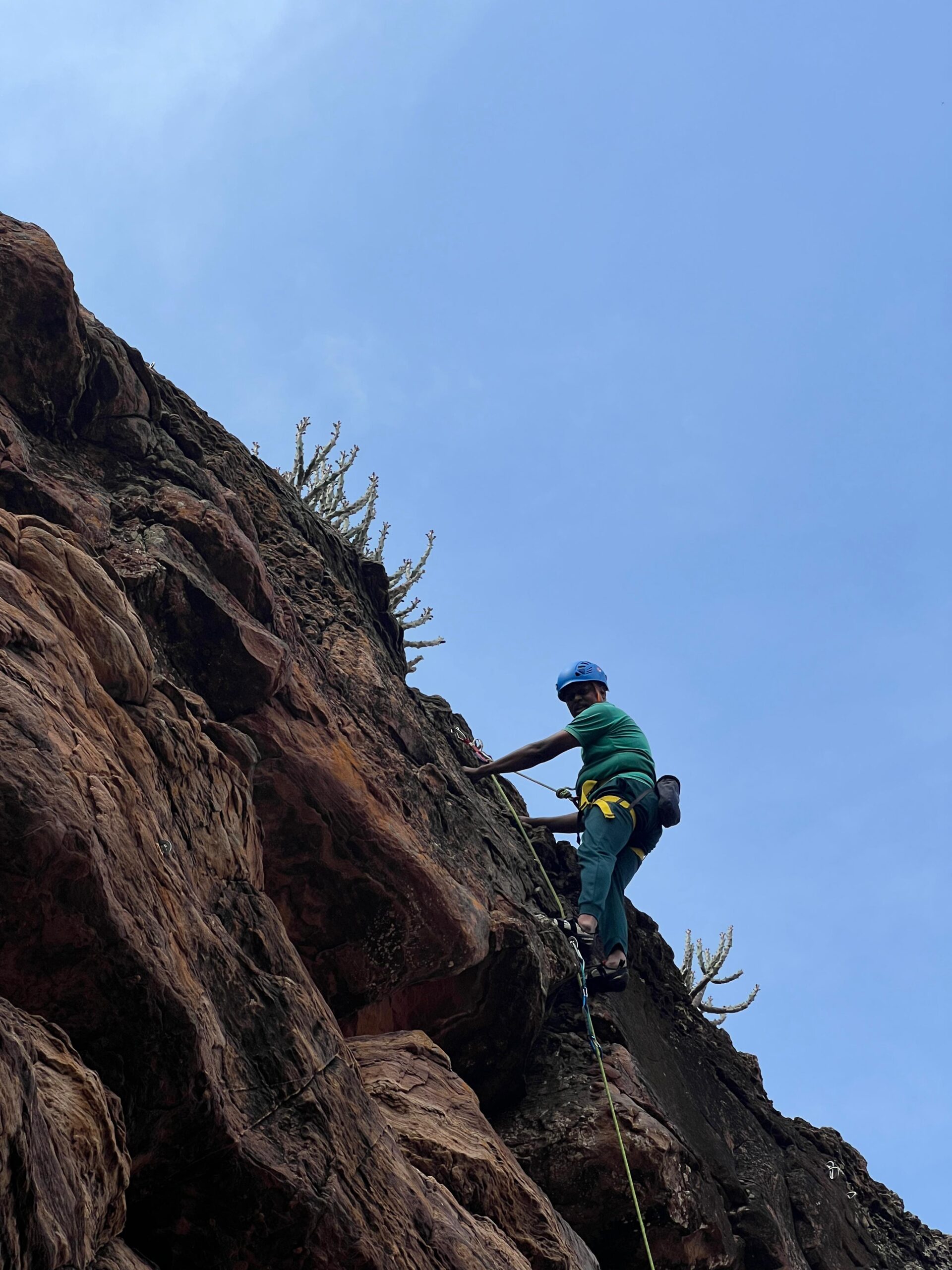
Complete Travel Guide to Badami Cave Temples, (UNESCO Heritage Sites)and Red Sandstone Adventure
Nestled in the rugged terrains of northern Karnataka, Badami is a treasure trove of history and culture. Once the capital of the Chalukya dynasty, this ancient town is famed for its awe-inspiring rock-cut cave temples, intricate carvings, and serene surroundings. For history buffs and architecture enthusiasts, Badami offers an enriching experience, transporting visitors back to the 6th and 7th centuries.
History of Badami
Badami, originally known as Vatapi, served as the capital of the Early Chalukya dynasty between the 6th and 8th centuries. Under Chalukyan rule, the town flourished as a center of art, culture, and architecture. The Chalukyas are credited with pioneering the Vesara style of architecture, a harmonious blend of northern Nagara and southern Dravidian styles. Their patronage resulted in the creation of the iconic Badami Cave Temples, which remain a testament to their vision and craftsmanship.
The town’s strategic location in a valley surrounded by sandstone cliffs made it an ideal capital. However, after the decline of the Chalukyas, Badami witnessed rule by various dynasties, including the Rashtrakutas, Hoysalas, and the Vijayanagara Empire, each leaving its mark on the town’s rich heritage.
Discover the Marvels of Badami – The Land of the Chalukyas
Karnataka, a state in modern India, is a treasure trove of wonders. Its lush landscapes, historical towns, and cultural heritage attract nature enthusiasts and history buffs alike. Among its many jewels, Badami stands out as a testament to the grandeur of the Chalukya dynasty, which ruled the region from the 6th to the 12th centuries, leaving behind an architectural and cultural legacy that endures to this day.
Badami: A Glimpse Into History
Nestled in the present-day Bagalkot district of northern Karnataka, Badami was the capital of the Chalukyas. Surrounded by sandstone hills and located at the mouth of a ravine, the town is famed for its remarkable cave temples—masterpieces carved into the red sandstone that blend art, architecture, and spirituality.
The Cave Temples of Badami
The four cave temples of Badami are a marvel of rock-cut architecture. Built over centuries, three temples are dedicated to Hindu deities, while the fourth honors Jainism. Connected by flights of stone stairs, these temples are not just places of worship but also treasure troves of intricate carvings and sculptures.
Temple Highlights
- First Cave Temple
- Dedicated to Lord Shiva in his Nataraja form (the divine cosmic dancer).
- Features over 80 unique depictions of Nataraja, along with intricate reliefs of Ardhanareeswara (a composite form of Shiva and Parvati), Ganapati, and Shanmukha.
- The square sanctum and pillared hall showcase exquisite craftsmanship.
- Second Cave Temple
- Devoted to Lord Vishnu, depicted in his Trivikarma avatar.
- Renowned for stunning ceiling carvings illustrating scenes from the Puranas and Vishnu seated on Garuda.
- Third Cave Temple
- Another shrine dedicated to Vishnu, accessed by a flight of 60 stairs.
- Highlights include depictions of Vishnu in forms such as Trivikarma, Vamana, and Narasimha.
- Murals portray the divine marriage of Shiva and Parvati, while a striking statue of Vishnu reclining on Adisesha adds to its allure.
- Fourth Cave Temple
- Dedicated to Jainism and its founder, Lord Mahavira.
- Features carvings of Tirthankaras, including Parshavnatha with a serpent at his feet.
- Built a century later than the first three temples, this cave reflects Jain artistry and devotion.
A Golden Age of Architecture
The Badami cave temples represent the zenith of Chalukyan architecture, blending northern Nagara and southern Dravidian styles. Perched on sandstone cliffs, these temples overlook the valley below like timeless guardians of spirituality and artistry. They set the foundation for South Indian temple architecture, inspiring generations of builders and artists.
Explore Badami
Beyond the cave temples, the Badami Fort and other heritage sites await exploration. Whether you’re a history enthusiast or an architecture lover, Badami promises an unforgettable journey through time.
Plan your visit to this extraordinary destination and immerse yourself in the legacy of the Chalukyas.
Beyond the Caves: Exploring Badami’s Heritage
While the cave temples are the centerpiece, Badami’s charm extends beyond them. Visitors can explore the following attractions:
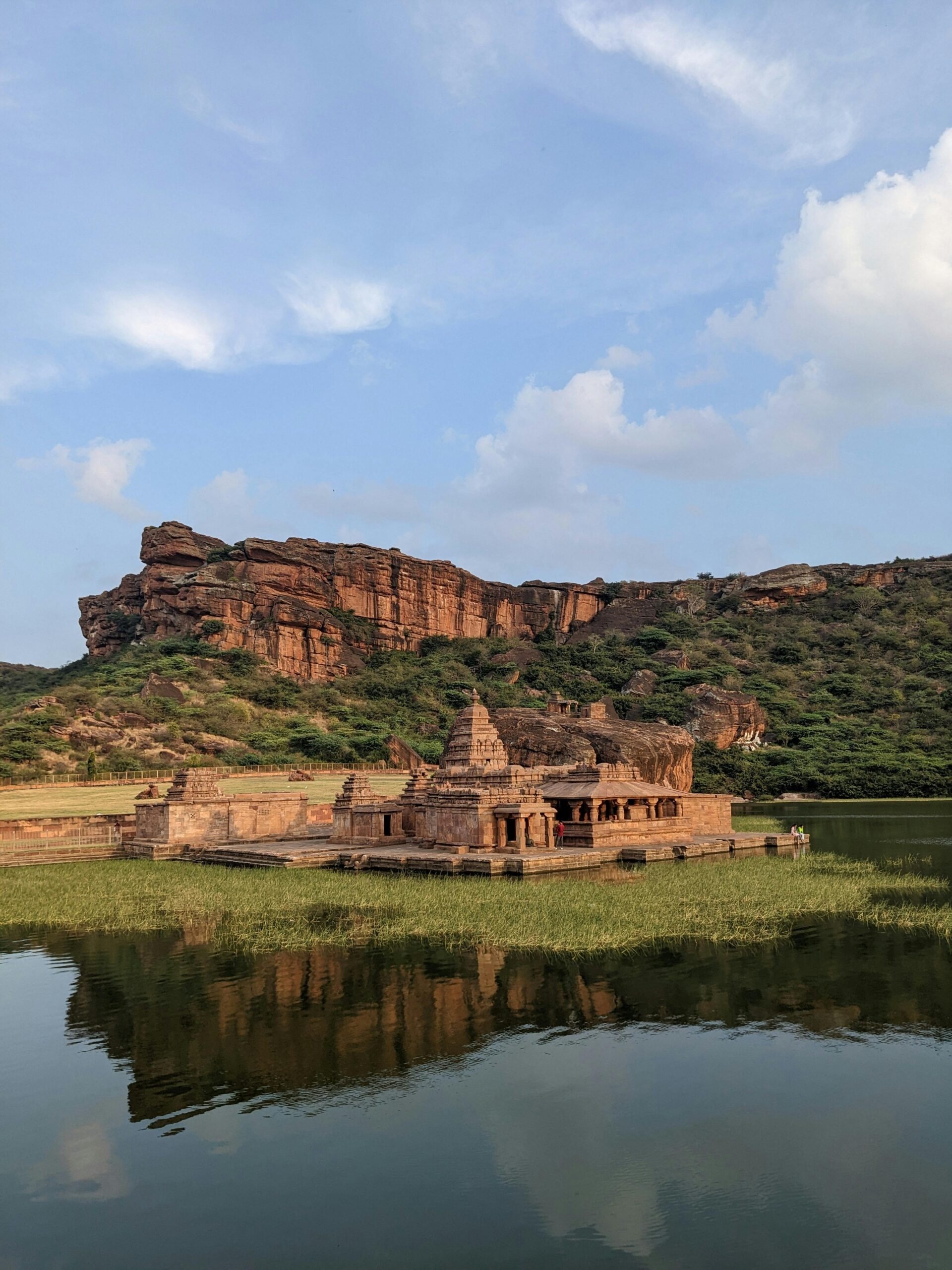
- Agastya Lake: Situated below the caves, this picturesque lake is believed to have purifying powers. The view of the temples reflecting in its waters is a sight to behold.
- Bhutanatha Temples: Located on the banks of Agastya Lake, these temples showcase beautiful carvings and a serene atmosphere.

- Badami Fort: Perched atop a hill, the fort offers panoramic views of the surrounding landscape and glimpses into Badami’s historical defenses.
- Best Time to Visit: October to March is ideal, as the weather is pleasant for exploring the outdoor attractions.
- Getting There: Badami is well-connected by road and rail. The nearest airport is in Hubli, about 105 km away.
- Where to Stay: Several budget and mid-range accommodations are available in Badami. For a more luxurious experience, travelers can opt for resorts in nearby Pattadakal or Hampi.
- What to Pack: Comfortable walking shoes, sunscreen, and a water bottle are essential for exploring the caves and surrounding areas.
Agastya Lake: A Scenic and Spiritual Oasis
One of the most captivating features of Badami is Agastya Lake, a serene body of water situated below the cave temples. Named after the revered sage Agastya, the lake is believed to have purifying powers. Surrounded by rugged sandstone cliffs, the lake offers a stunning backdrop to the ancient monuments.
The tranquil waters of Agastya Lake not only enhance the beauty of the cave temples but also provide a sense of calm to visitors. The reflection of the temples in the shimmering waters during sunrise or sunset is a photographer’s delight and a sight that inspires awe.
Visitors can also explore the Bhutanatha Temples located on the lake’s banks. These temples, dedicated to Lord Shiva, are known for their simple yet elegant architecture and are best visited during the golden hours for an ethereal experience.
Certainly! Here’s a guide to some fascinating places to visit near Badami, a region steeped in history and culture, offering a unique blend of natural beauty and architectural marvels:
18 Places to visit in Badami | Best Tourist
1. Banashankari Temple
Located in Badami, the Banashankari Temple is a revered site dedicated to Goddess Banashankari, a form of Parvati. Known for its Dravidian architecture, the temple attracts numerous devotees, especially during the Banashankari Jatre festival.
2. Bhuthanatha Temple
Bhootnath Temple: A Testament to Timeless Craftsmanship
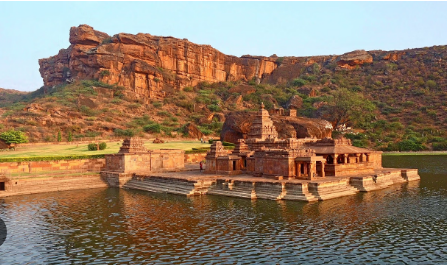
Overlooking the serene Agasthya Teertha lake stands the majestic Bhootnath Temple, a structure believed to date back to the 5th century AD. This remarkable temple complex is a testament to the enduring civilizations that once flourished in the region.
The Bhootnath Temple comprises multiple shrines and structures, including two prominent temples, each built over centuries. This gradual construction reflects a fascinating fusion of architectural styles, showcasing the evolution of techniques and artistry that later defined South Indian temple architecture. A visit to this sacred site offers a glimpse into the region’s rich heritage and artistic brilliance, making it a must-see landmark in Badami.
Situated near the picturesque Agastya Lake, the Bhuthanatha Temple is a fine example of Chalukyan architecture. The temple, dedicated to Lord Shiva, offers a serene environment and stunning views of the lake.

3. Sangameshwara Temple
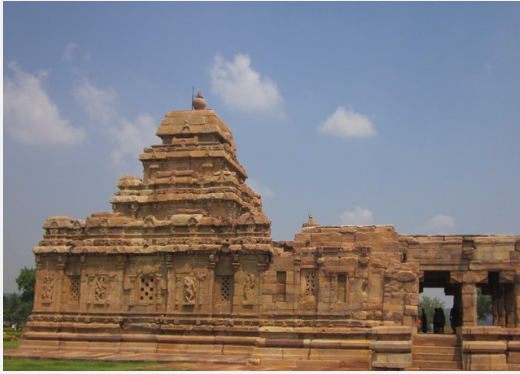
A testament to early Chalukyan art, the Sangameshwara Temple is an architectural gem. Located in nearby Pattadakal, this temple showcases intricate carvings and historical significance.
4. Agastya Lake
Agasthya Teertha: A Tranquil Gem in Badami
Badami’s charm is beautifully complemented by the serene Agasthya Teertha, a tranquil lake nestled at the base of the sandstone hills. This picturesque waterbody forms the perfect foreground to the stunning architectural landmarks surrounding it. After a day of exploring Badami’s historical treasures, Agasthya Teertha offers a peaceful retreat. Believed by devotees to possess healing properties, its waters add a spiritual touch to the lake’s natural beauty, making it a must-visit spot in this historic town.
Nestled amidst rocky hills and ancient monuments, Agastya Lake is a tranquil spot ideal for reflection and exploration. Its surroundings include numerous temples and cave structures, adding to its allure.
5. Malegitti Shivalaya Fort and Temple
Perched atop a hill, this temple is one of the oldest dedicated to Lord Shiva. Its location within the Malegitti Shivalaya Fort provides panoramic views of the Badami landscape.

6. Badami Fort
Badami Fort: A Glimpse into History and Architecture
Perched on a hill opposite the iconic cave temples, Badami Fort is a treasure trove of ancient carvings, sculptures, and historical significance. This hilltop fortress houses fascinating features such as a large granary, an underground chamber, and one of the region’s oldest Shiva temples, the Malegitti Shiva Temple.
The climb to the fort is steep, but the journey is rewarded with stunning viewpoints offering panoramic vistas of Badami’s rugged beauty.
Key Highlights
- Upper Shivalaya
- Built by the Chalukyan ruler Pulakesin II, this temple is adorned with intricate sculptures depicting scenes from mythological tales.
- The lion and elephant heads carved above the temple stairs are particularly striking and showcase the artistic finesse of the era.
- Lower Shivalaya
- Dedicated to Lord Ganesh, this temple features a 16th-century cannon standing as a guardian overlooking the town below.
Badami Fort is not just a historical site but also a testament to the architectural brilliance and cultural richness of the Chalukya dynasty, making it a must-visit destination for history enthusiasts and explorers.
Overlooking the town, Badami Fort is a historic site built during the Chalukyan era. Its strategic location offers breathtaking views of Agastya Lake and the surrounding temples.

7. Ravana Pahad
Known for its association with legends and myths, Ravana Pahad is a must-visit for history and nature enthusiasts. The rocky terrain and caves provide a glimpse into ancient architecture.
8. Lad Khan Temple
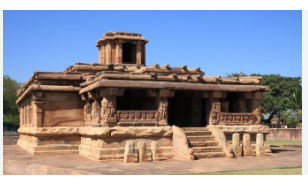
Situated in Aihole, this temple is among the earliest Hindu temples and reflects a unique architectural style. Dedicated to Lord Shiva, it’s a favorite spot for history buffs.
9. Mahakuteshwara Temple
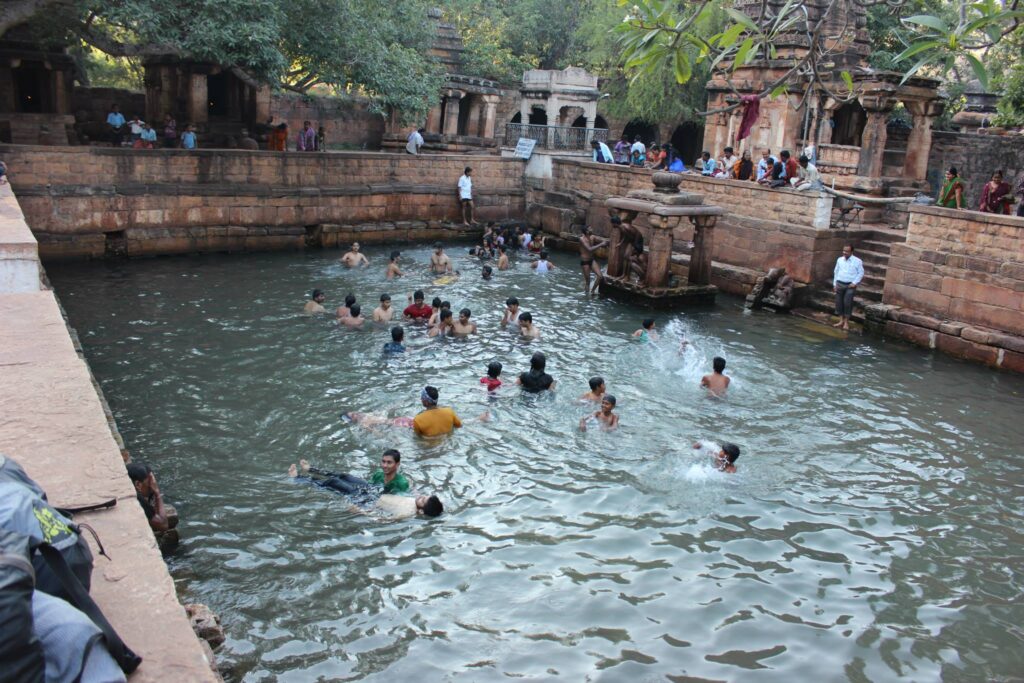
Located in Mahakuta, this ancient temple complex is surrounded by natural springs. It’s a tranquil place dedicated to Lord Shiva and features exquisite carvings.
10. Mahakuteshwara Temple
Found in Pattadakal, the Durga Temple is renowned for its unique apsidal architecture. The carvings on its walls narrate tales from Hindu mythology, making it an important historical site.

11. Twin-Towered Shiva Temple
This rare architectural marvel stands out for its twin towers. A visit here provides insights into the innovative styles of the Chalukyan period.

12. Shiva Yogi Mandhir
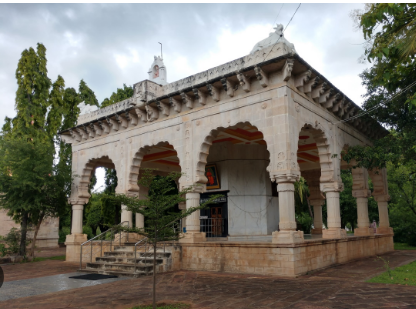
A spiritual retreat surrounded by scenic beauty, this mandhir offers a peaceful environment for meditation and devotion.
13. Pattadakal(badami pattadakal)
A UNESCO World Heritage Site, Pattadakal is a treasure trove of Chalukyan architecture. Its group of monuments, including the Virupaksha and Mallikarjuna Temples, are a must-see.
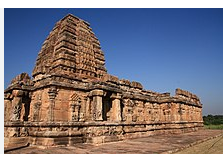
14. Mallikarjuna Temple
This temple, part of the Pattadakal complex, showcases intricate carvings and a rich history. Its Dravidian style is a highlight for visitors.

15. Lower & Upper Shivalaya
Located in Badami, these temples offer a blend of religious significance and stunning views. The Upper Shivalaya, in particular, requires a short hike and rewards visitors with spectacular vistas.

16. Archaeological Museum, Badami
Badami Museum: A Gateway to the Past
Badami is not only renowned for its cave temples but also for its archaeological museum, which offers a deeper dive into the region’s rich history and culture. This museum houses a fascinating collection of local artifacts and curios, shedding light on the ancient civilizations that once thrived here. Among its notable exhibits are the depictions of the goddess Lajja-Gauri, which hold great significance. These portrayals highlight a unique sect that flourished during the Chalukyan era, offering a glimpse into the spiritual and cultural diversity of the time.
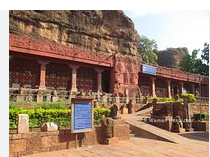
A repository of artifacts, this museum offers a glimpse into the region’s history, with exhibits that include sculptures, inscriptions, and ancient tools.
17. Akka Tangi Falls
A natural wonder near Badami, these falls are a serene spot for relaxation and photography. The name translates to “Elder and Younger Sister Falls,” adding a local legend to its charm.
Each of these locations around Badami offers a unique experience, blending history, spirituality, and natural beauty. Whether you’re an architecture enthusiast, a nature lover, or a spiritual seeker, these sites promise an unforgettable journey through time.

18 Siddelu Padi
Tips for Tourists Planning to Visit Badami
- Best Time to Visit: October to March is ideal, as the weather is pleasant for exploring the outdoor attractions.
- Getting There: Badami is well-connected by road and rail. The nearest airport is in Hubli, about 105 km away.
- Where to Stay: Several budget and mid-range accommodations are available in Badami. For a more luxurious experience, travelers can opt for resorts in nearby Pattadakal or Hampi.
- What to Pack: Comfortable walking shoes, sunscreen, and a water bottle are essential for exploring the caves and surrounding areas.
Fairs and Festivals of Badami: A Celebration of Culture and Faith
Badami continues to be a hub of religious and social activity, blending its historical significance with vibrant modern-day traditions. Visitors seeking to experience the town’s lively spirit should plan their trip during the temple festivals.
- Banashankari Festival: Held in the winter months, this grand celebration at the Banashankari Temple is a visual and cultural spectacle.
- Mallikarjuna and Virupaksha Temple Festivals: These are other significant occasions where the town comes alive with devotion and festivity.
Exploring Badami
Navigating Badami is simple, as the town is compact and best experienced on foot. Early mornings and evenings are ideal for exploring the caves, offering stunning light for photography and a tranquil atmosphere. Aside from the iconic landmarks, the town is dotted with hidden gems waiting to be discovered.
For short-distance travel within Badami, auto-rickshaws are a convenient and popular option. Whether walking or riding, immersing yourself in Badami’s charm and culture is an experience to treasure.
How to Reach Badami
By Rail
Badami has its own railway station, located about 5 km from the town center. Regular trains connect Badami with major cities like Bangalore and Bijapur. Additionally, you can travel to nearby hubs such as Hubli or Solapur and switch to alternate modes of transport or connecting trains to reach Badami.
By Road
Badami is approximately 450 km from Bangalore via NH48 and NH50, with a driving time of around 9 hours. The town is well-connected by bus services, with regular routes operating from cities like Bangalore, Hospet, Gadag, and Bijapur.
By Air
The nearest airport to Badami is Hubli Airport, situated just 84 km away. Alternatively, you can fly to Sambre Airport in Belgaum, which is approximately 123 km from Badami.
Why Visit Badami?
Badami is a living tapestry of Karnataka’s heritage, offering visitors a journey back to a glorious era of architectural brilliance and rich cultural traditions. This historic town provides a kaleidoscope of South India’s artistic evolution, spiritual significance, and layered mythologies.
Whether you’re a history enthusiast, a seeker of spirituality, or an admirer of art, Badami promises an unforgettable experience. It’s the perfect escape for those yearning to connect with the past or to find solace away from the hustle and bustle of urban life.
Tourist map of Badami
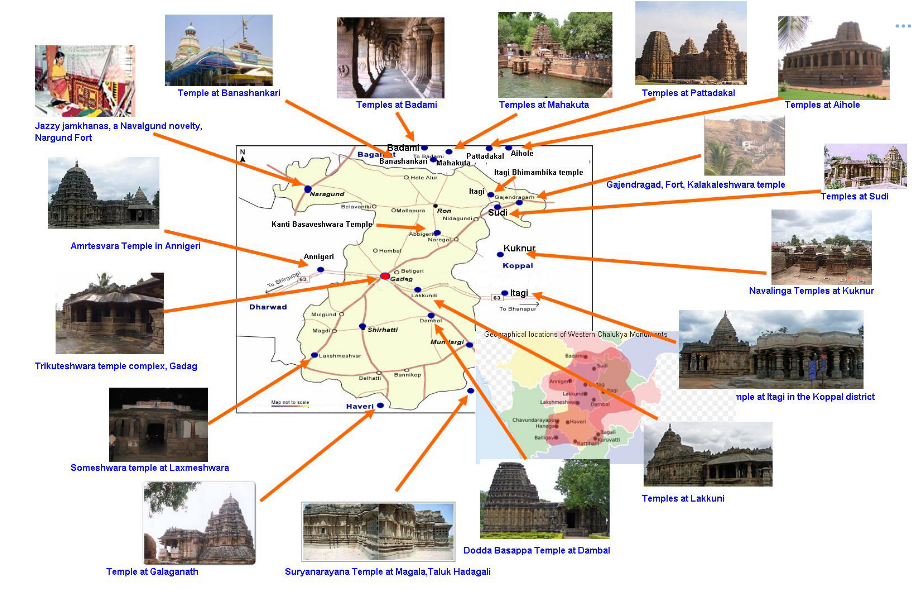
Aihole The Complete Guide to Karnataka’s Cradle of Indian Architecture
Aihole: The Complete Guide to Karnataka’s Cradle of Indian Architecture
Unveiling the History of Aihole: The Chalukyan Laboratory
This is a complete, SEO-friendly blog post structure for a guide to Aihole, focusing on its history, key attractions, and practical travel logistics.
Aihole: The Complete Guide to Karnataka’s Cradle of Indian Architecture
Aihole: The Complete Guide to Karnataka’s Cradle of Indian Architecture
Unveiling the History of Aihole: The Chalukyan Laboratory
Aihole is not just a village with temples; it is considered the “Cradle of Indian Temple Architecture.” This tiny town served as the first capital of the Early Chalukya Dynasty (6th to 8th Century AD) before they moved their power center to nearby Badami.
The rulers of the Chalukya dynasty used Aihole as an experimental ground for architectural styles. Over $125$ temples were constructed here, showcasing initial efforts and combinations of various temple forms, which later matured into the distinct North Indian (Nagara) and South Indian (Dravidian) styles seen in Pattadakal. This makes Aihole a living, open-air textbook of Indian art and history.
The Chalukyan Timeline
5th – 6th Century AD: Early Chalukyas establish their capital at Aihole.
The Laboratory: Sculptors and artisans experiment with different designs, materials, and carvings, laying the foundation for Deccan architecture.
Shift of Power: The capital later moved to Badami (Vatapi) for strategic reasons, and then coronations were held at Pattadakal.
Must-Visit Places in Aihole: The Architectural Highlights
. The Durga Temple Complex (The Central Hub)
Despite its name, this temple is dedicated to the Sun God (Surya) and Shiva, not the Goddess Durga in her fierce form. It is the most famous and architecturally distinct structure in Aihole.
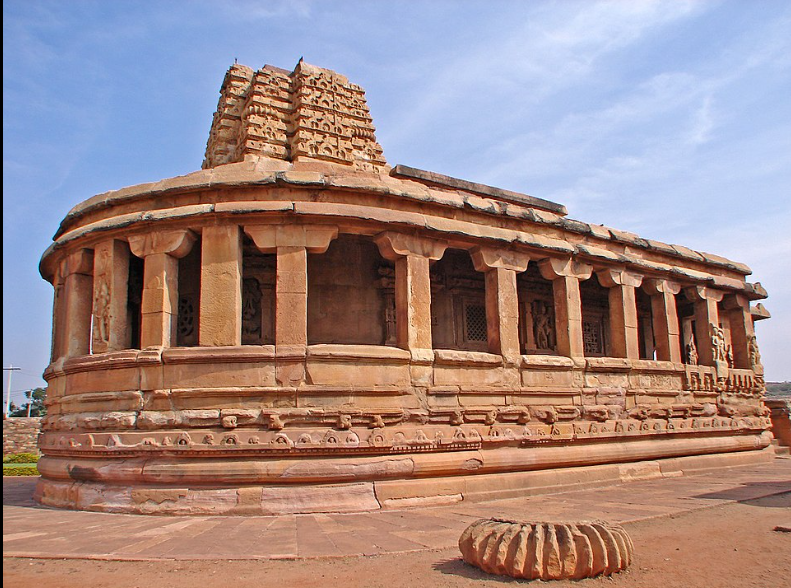
The Iconic Durga Temple
Unique Architecture: Its most notable feature is its apsidal (semi-circular) plan, resembling the design of Buddhist Chaitya halls, which is highly unusual for a Hindu temple.
Sculptural Detail: Marvel at the intricate sculptures lining the colonnaded corridor (or pradakshinapatha), featuring deities like Shiva, Vishnu, and Mahishasuramardini.
Lad Khan Temple
One of the oldest temples in Aihole, originally conceived as a royal assembly hall (mandapa). It is characterized by heavy stone pillars and a unique roof structure, showing the Chalukyas’ initial, experimental designs.
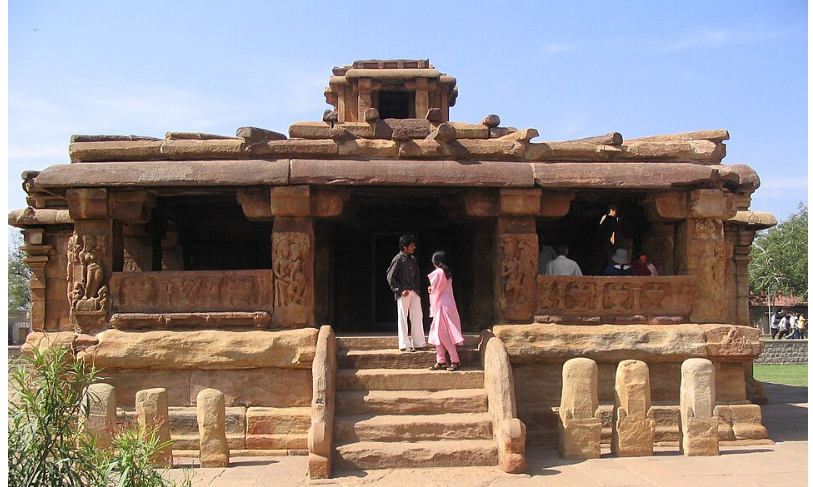
Suryanarayana Temple
Dedicated to the Sun God, this temple showcases a two-tiered superstructure and an intricate image of Surya with his consorts, Usha and Prathyusha.
Isolated Monuments and Hilltop Views
Ravanaphadi Cave Temple
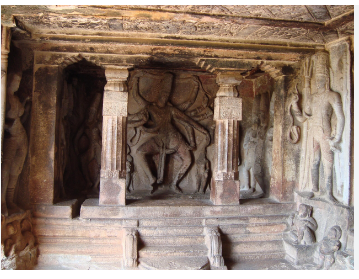
- A smaller, rock-cut cave dedicated to Lord Shiva, notable for its exquisitely carved $10$-armed dancing Nataraja and the depiction of the Saptamatrikas (seven mother goddesses).
Meguti Jain Temple
- Located atop a hill, this temple is important because its inscription dates it to 634$ AD. The temple itself is an early example of a Dravidian-style structural temple and offers a fantastic panoramic view of the entire Aihole village.

Planning Your Trip to Aihole (Logistics and Tips)
ihole is best visited as part of the Badami-Pattadakal-Aihole circuit, as the sites are located within a short driving distance of each other.
How to Reach Aihole
Aihole does not have its own railway station or airport and is primarily accessed from Badami, the nearest major town.
| Mode | Route and Distance | Notes |
| Nearest Town | Badami (approx. 35 km) | Badami serves as the accommodation base for the entire circuit. |
| By Auto/Taxi | Hire a local auto-rickshaw or taxi from Badami for a full-day trip covering Aihole and Pattadakal. | The total cost for the day trip usually ranges from ₹1,000 to ₹1,500. |
| By Bus | Local state buses run frequently between Badami and Aihole, offering a very budget-friendly option. | Check schedules for the return trip, as frequency decreases later in the day. |
| Nearest Airport | Hubballi (Hubli) Airport (HBX) – approx. 130 km | Connected by flights from major cities like Bangalore and Mumbai. |
The Cradle of Indian Architecture: Your Complete Guide to Pattadakal
Pattadakal, a UNESCO World Heritage Site in Karnataka, is not just a collection of temples; it is a stunning open-air university of Indian architectural history. As the ceremonial site for the coronation of the powerful Badami Chalukya kings, it showcases an unparalleled fusion of architectural styles.
Unveiling Pattadakal: History and Significance
Pattadakal (meaning “Coronation Stone”) served as the regal and religious hub of the Chalukya Dynasty (6th to 8th centuries CE), which also ruled the nearby capitals of Badami and Aihole.
The Architectural Experiment
what makes Pattadakal unique is its role as the culmination of the Chalukyan architectural journey. While Aihole was the “laboratory” where they experimented with early temple forms, and Badami refined the rock-cut cave temples, Pattadakal was the “workshop” where the masters executed their finest work.
The site is famed for demonstrating the seamless blending of two major temple building styles:
- Nagara Style: The curvilinear tower characteristic of North Indian temple architecture (e.g., Kashi Vishwanatha Temple).
- Dravidian Style: The tiered, pyramidal structure characteristic of South Indian temple architecture (e.g., Virupaksha Temple).
This fusion is a testament to the cultural synthesis achieved under the Chalukyan empire, which made Pattadakal one of the most celebrated UNESCO World Heritage Sites in India since 1987.
Places to Visit: The Pattadakal Group of Monuments
The temple complex sits elegantly on the western bank of the Malaprabha River. The temples are a blend of ten major shrines—nine Hindu and one Jain—each offering a deep dive into Hindu mythology and Chalukyan artistry.
The Grandeur of the Virupaksha Temple
This is the largest and arguably the most magnificent temple at Pattadakal, built around 745 CE by Queen Lokamahadevi to commemorate her husband’s (King Vikramaditya II) victory over the Pallavas of Kanchipuram.
- Style: Pure Dravidian style.
- Highlight: The intricate stone panels depicting episodes from the Hindu epics, the Ramayana and Mahabharata. The colossal Nandi statue in the entrance pavilion is a major attraction.
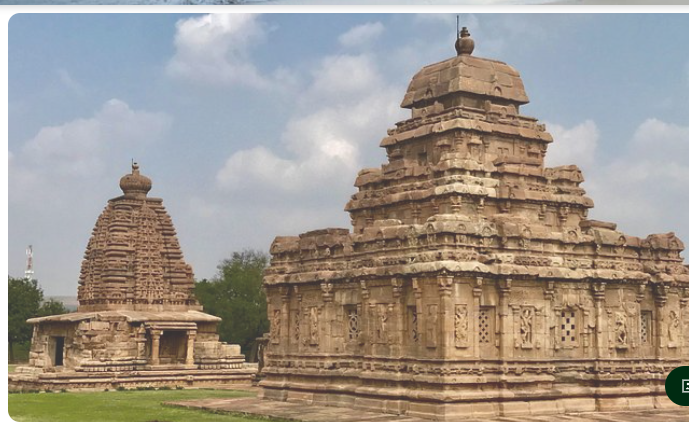
The Mallikarjuna Temple
Standing right next to the Virupaksha Temple, the Mallikarjuna Temple was constructed by the second Queen, Trilokamahadevi, also to celebrate the Pallava victory.
- Style: Also in Dravidian style, it is structurally similar to Virupaksha but slightly smaller.
- Highlight: Look for the exquisite carvings showing scenes like the education of the princes, the birth of Krishna, and the Panchatantra fables.
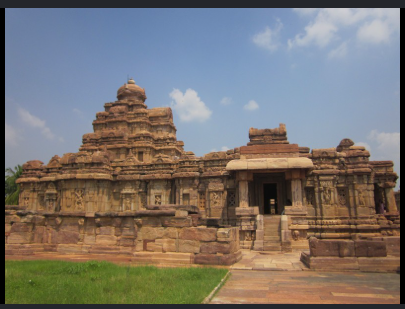
Papanatha Temple: The Blend of Styles
This temple is an excellent example of the Chalukyan transition and architectural fusion.
- Style: It predominantly uses the Nagara style spire but incorporates South Indian (Dravidian) elements.
- Highlight: Its long hall (mandapa) features scenes from the Ramayana, running continuously along the walls.
The Galaganatha and Kashi Vishwanatha Temples
These temples strongly represent the Nagara (North Indian) style, with their smooth, curvilinear towers (Shikharas).
- Galaganatha Temple: Dedicated to Lord Shiva, the temple’s spire is particularly well-preserved.
- Kashi Vishwanatha Temple: Built by the Rashtrakutas (who took over from the Chalukyas), its construction marks the end of the architectural zenith at the site.
jain Narayana Temple
Located slightly away from the main cluster, this temple showcases the diversity of the Chalukyan religious patronage.
- Style: Built by the Rashtrakutas in the Dravidian style, it features beautiful sculptures of the Tirthankaras.
Pattadakal Travel Logistics
Pattadakal is typically visited as part of a circuit trip that includes Badami and Aihole.
How to Reach Pattadakal
Pattadakal is well-connected to its surrounding heritage sites:
| Starting Point | Distance | Recommended Transport |
| Badami Town | ~22 kilometers | Local auto-rickshaw (hired for the day) or shared taxi/bus. |
| Aihole Village | ~10 kilometers | Local auto-rickshaw or shared taxi (often the second stop after Badami). |
| Nearest Railway Station | Badami Railway Station (BDM) | Well-connected with overnight trains from major cities like Bengaluru. |
| Nearest Airport | Hubli Airport (HBX) | Approximately 120 km away. Hire a pre-paid taxi from the airport. |
Essential Travel Tips for Pattadakal
- Duration: Plan to spend 2 to 3 hours exploring the Pattadakal complex thoroughly.
- Best Time to Visit: October to March offers the most pleasant weather. Avoid the peak summer months (April to June) when temperatures soar.
- Guides: Although the temples have descriptive signboards, hiring an official ASI (Archaeological Survey of India) guide can significantly enrich your visit by explaining the complex mythology and architectural details.
- Footwear: Since the site is well-maintained with manicured lawns, normal walking shoes are fine. However, you must remove them to enter the temples. Socks are recommended to protect your feet from the sun-heated stone.
- Tickets: Entry is paid and covers the entire main complex. Combined tickets with Aihole may be available